Have you ever walked into a room and immediately felt uncomfortable, but you couldn't quite put your finger on why? Often, the culprit is bad lighting. Relying on a single, harsh overhead fixture is one of the easiest ways to ruin the mood of an otherwise beautiful room. It flattens your decor, casts weird shadows, and makes your home feel more like a sterile clinic than a cozy retreat.
So how do you fix this? The secret lies in a concept called layered lighting. Think of it like dressing in layers for cold weather. You need different pieces to work together to keep you comfortable. In home design, this means balancing three distinct types of light.
Types of Home Lighting
First, you have ambient lighting, which is the general overhead light that lets you move around safely. Next is task lighting, which focuses bright light on specific activities like reading or chopping vegetables. Finally, there is accent lighting, which highlights artwork, architectural features, or dark corners.
To make these layers work, you must balance brightness and color temperature. Today, LEDs make up about 87% of all residential and commercial light sources.¹ They use 75% less energy than old incandescent bulbs, but they also give you total control over color temperature. For a cohesive feel, keep your main living spaces in the warm white range (around 2700K to 3000K). Going too cool makes your home feel cold, while going too warm can make it feel dingy.
Using human-centric lighting, which shifts color temperatures to mimic natural daylight, can actually boost your daily productivity by 6% and improve your sleep.¹ It is all about choosing the right light for the right time of day.
The Heart of the Home with Kitchen and Dining Room Lighting
The kitchen is the ultimate multi-tasking space, so your lighting needs to work hard here. You can't just put a single light in the middle of the ceiling and call it a day. If you do, you'll end up standing in your own shadow every time you try to prep dinner.
Instead, you should prioritize task lighting in food preparation areas. Under-cabinet LED tape lights are perfect for this. They throw clean, direct light right onto your countertops where you need it most. For general illumination, sleek recessed lights or modern monopoint fixtures work beautifully to keep the space bright and airy.
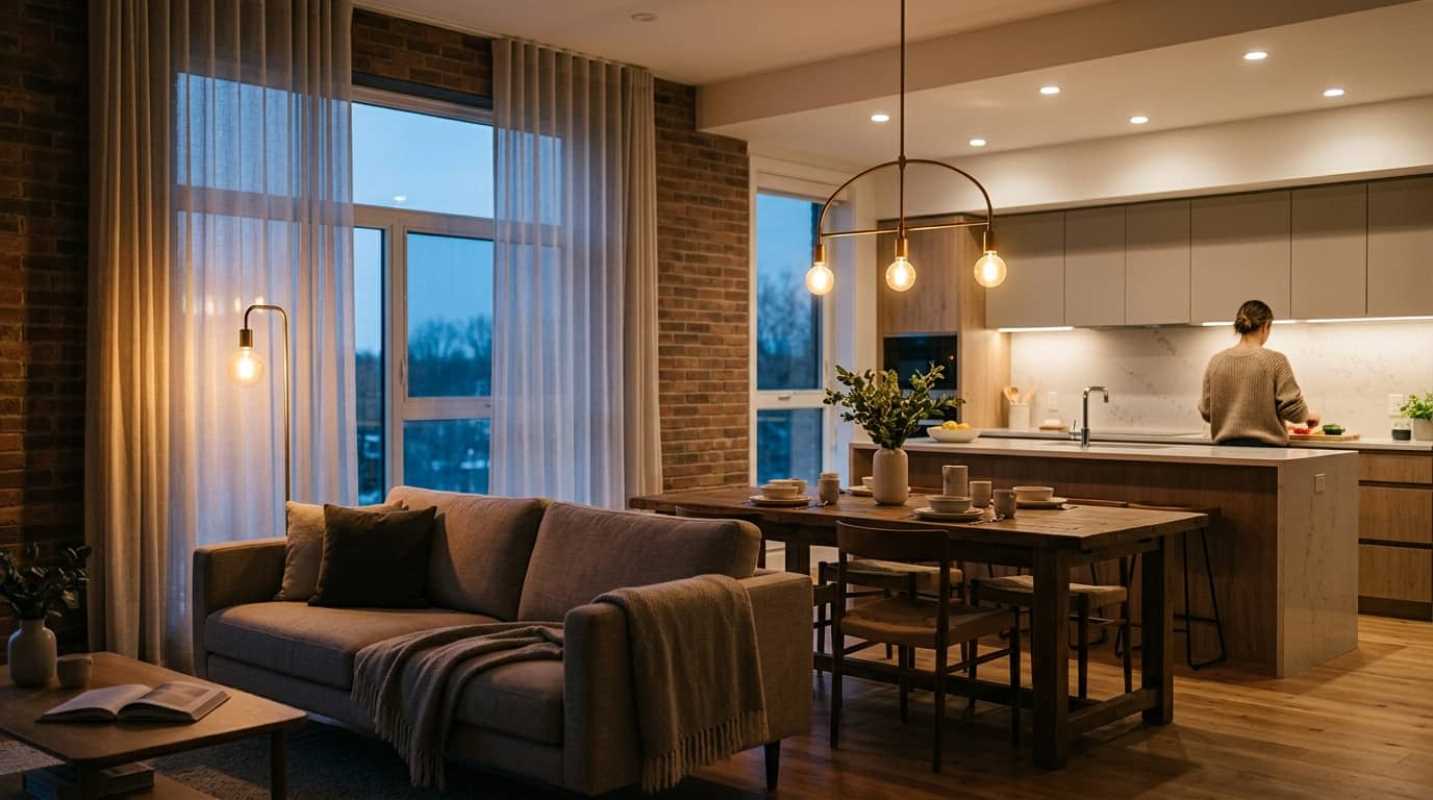
For the island or the dining table, it is time to make a statement. Hanging a pair of eye-catching pendants over your kitchen island or a dramatic chandelier over your dining table creates an instant focal point. Designers love using warm metals like brushed brass or natural textures like woven rattan to soften the hard surfaces of kitchen cabinets and stone countertops.
In the dining room, the rules change slightly. This space is all about mood and conversation. Your dining fixture should hang about 30 to 36 inches above the table surface. Always install a dimmer switch here so you can easily transition from a bright family homework session to an intimate dinner party.
Creating a Sanctuary with Lighting for Bedrooms and Bathrooms
Your bedroom should be a place where your brain instantly knows it is time to unwind. To achieve this, you want to keep your light sources low to the ground. Instead of blinding overhead fixtures, rely on warm bedside lamps or low-mounted wall sconces.
Using dimmable bulbs is non-negotiable in the bedroom. You can even use smart bulbs that automatically shift from a bright, energizing light in the morning to a soft, warm amber glow (around 2200K) as you get ready for bed. Pleated fabric shades or natural linen wraps are great choices here because they diffuse the light into a soft, flattering glow that feels incredibly relaxing.
The bathroom, on the other hand, requires a completely different approach. Have you ever tried to shave or apply makeup under a bright ceiling light? The overhead glare casts dark shadows under your eyes and nose, making grooming nearly impossible.
To avoid this, mount vertical sconces on both sides of your vanity mirror at eye level, roughly 60 to 66 inches from the floor. This provides even, shadow-free illumination across your face.
Just remember to check the safety ratings of your bathroom fixtures. Any light placed near a shower or tub needs to be wet-rated or damp-rated to handle the moisture safely.
Versatile Lighting for Living Rooms and Home Offices
Your living room is where life happens. You watch movies, read books, host friends, and sometimes just take a nap. Because this room does so many different things, versatility matters.
Instead of turning on a bright overhead light, use a mix of floor lamps and table lamps to create cozy, flexible seating zones. A sculptural floor lamp in a dark corner can turn an empty spot into a stylish reading nook.
This is also where the massive boom in smart lighting comes in handy. The smart lighting market grew rapidly in recent years, reaching an estimated $18 billion valuation.² Smart bulbs allow you to change the entire vibe of your living room with a single tap on your phone or a quick voice command.
If you have a home office, your lighting needs to keep you focused and prevent eye strain. Avoid placing your desk directly under a harsh overhead bulb. Instead, use an adjustable task lamp that directs light right onto your paperwork, and position your computer screen so it does not catch glare from nearby windows or lights.
To make your spaces even more flexible, consider adding cordless, rechargeable LED table lamps to your setup.³ These portable little lights are a massive trend because they let you place a warm pool of light anywhere, from a bookshelf to a kitchen island, without worrying about messy cords. For your living room, look for sculptural silhouettes like oversized, whimsical floor lamps to add a bit of artistic flair to your space.⁴
Pro Tips for Choosing and Installing Your Fixtures
Now that you know what each room needs, how do you actually shop for the right fixtures? First, you need to understand the difference between lumens and watts. In the past, we bought bulbs based on wattage, which is how much energy a bulb uses. Today, with energy-efficient LEDs, we look at lumens, which measure actual brightness. If you want a bright task light, look for higher lumens, not higher watts.
Scale is another common trap. A tiny light fixture in a room with tall ceilings will look lost, while an oversized chandelier in a small room can feel claustrophobic. As a general rule, add the length and width of your room in feet. That total number in inches is a great starting point for the diameter of your light fixture.
For installation, know your limits. Swapping out an existing light fixture or plugging in a new floor lamp is a fun, easy weekend project. But if you need to run new wiring, install recessed cans, or add switches, it is always best to call a professional electrician.
Finally, keep an eye on what is out of style. If you want to keep your home looking modern, avoid these outdated lighting choices:
• Harsh daylight bulbs: Cold, blue-toned white light (5000K+) in living spaces is out. Warm, dimmable, and amber tones (2200K to 2700K) are in.
• Builder-grade recessed cans: Standard, unshielded recessed ceiling lights that make a ceiling look like Swiss cheese are being replaced by sleek, trimless alternatives.
• Matching lighting sets: Buying a matching set of a chandelier, floor lamp, and table lamp from the same collection is outdated. The modern look relies on curated, mixed-material pieces that look like they were collected over time.
Sources:
1. Commercial Lighting Trends and HCL Benefits
https://www.alconlighting.com/blog/lighting-design/commercial-lighting-trends-2025/
2. Global Smart Lighting Market Insights
https://www.gminsights.com/industry-analysis/smart-lighting-market
3. Top Lighting Trends and Ideas
https://hugacollective.com/blogs/blog-posts/top-trends-and-lighting-ideas-in-2025
4. Best Lighting Trends and Designs
https://www.elledecor.com/design-decorate/trends/a63322628/best-lighting-trends-2025/