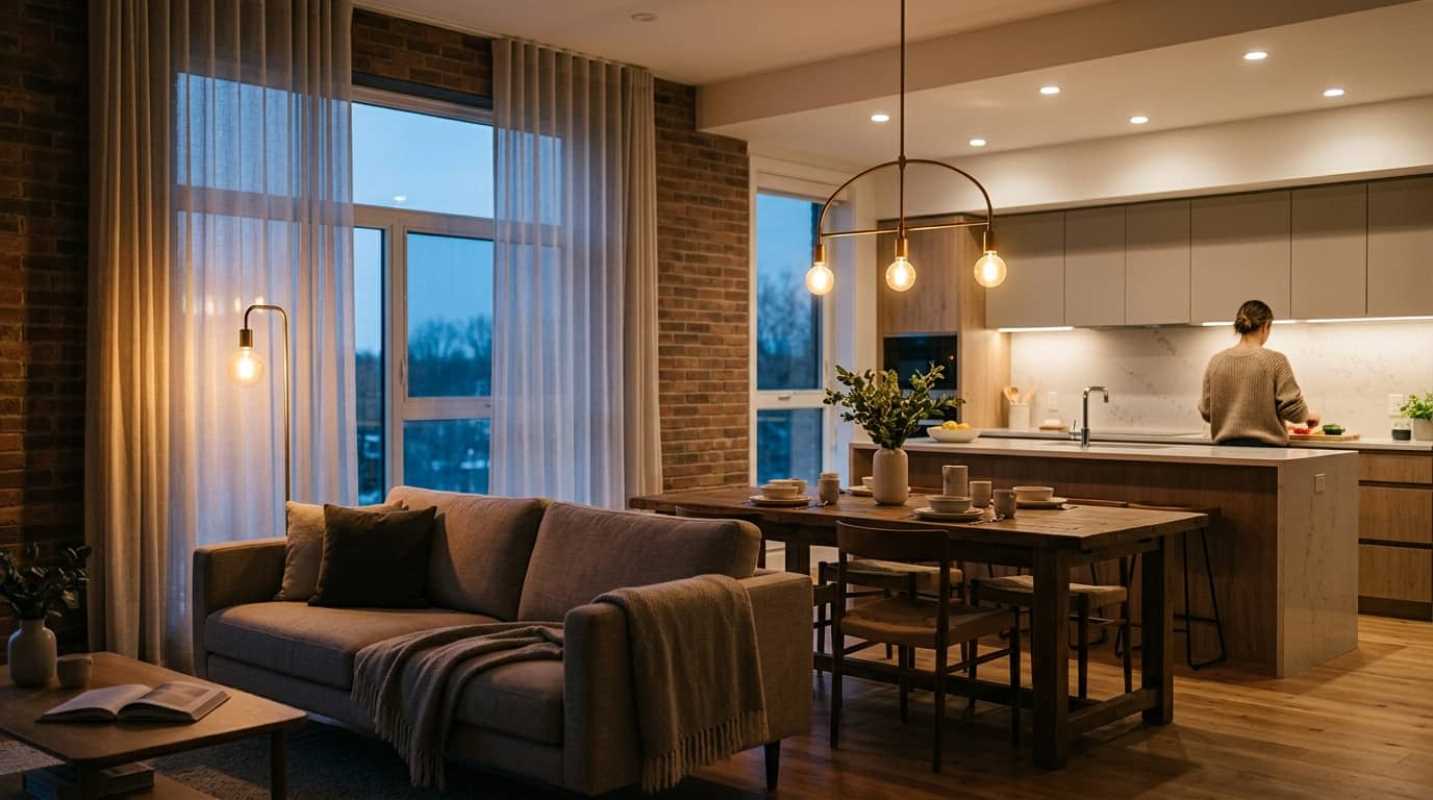
Have you ever walked into a high-end home and immediately felt a wave of calm wash over you? Although soft lighting and expensive linen play a part, the real driver is silence. Or rather, the absence of acoustic clutter. Today, home luxury extends far beyond visual aesthetics. True luxury is silent. Designers call this sensory architecture, and it is reshaping how we think about our living spaces.¹
Think about your average day. The hum of the refrigerator, the distant rumble of traffic, the buzz of the HVAC system, and the echo of footsteps on hard floors. It is a constant background static. This chronic noise exposure triggers a continuous stress response, raising cortisol levels and wearing down our mental peace.
In fact, recent studies link excessive environmental noise to chronic stress and cardiovascular strain. When you close your front door, you want a sanctuary, not an echo chamber. Privacy feels premium, especially when you can retreat to a quiet space without bringing the noise of the entire household with you.²
Understanding the Science of Acoustic Dampening and Soundproofing
Before you start tearing down drywall, you need to understand how sound actually behaves in your home. Homeowners often mix up acoustic dampening and soundproofing, but they do completely different jobs.³
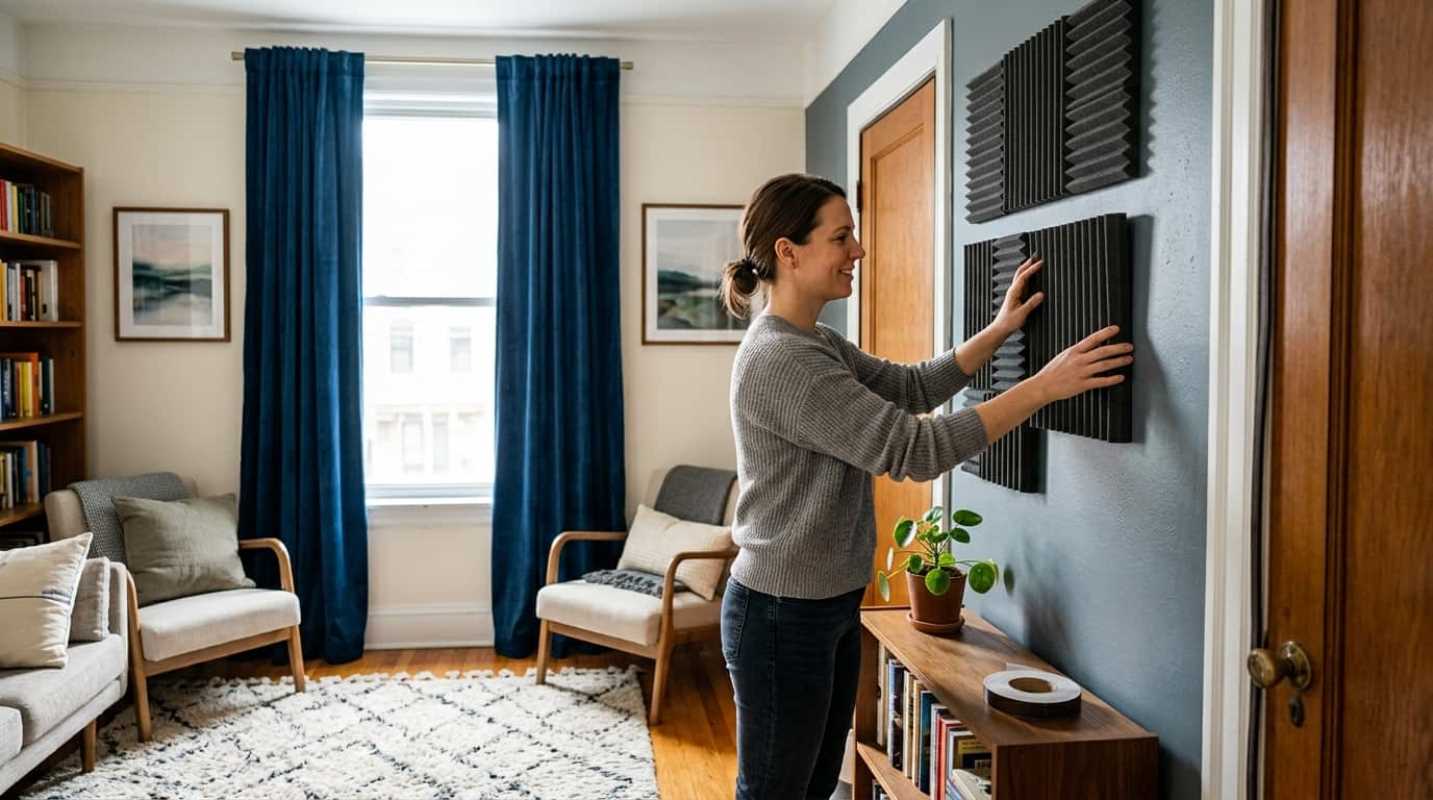
Think of acoustic dampening as a sponge. It absorbs sound waves inside a room, stopping them from bouncing off hard surfaces and creating that annoying echo.³ You do this with soft, porous materials like felt, wood slats, and heavy fabrics.
Soundproofing, on the other hand, is like a watertight lid on a bucket.³ It physically blocks sound from traveling between rooms or coming in from the outside. This requires heavy, dense materials and decoupled structures.
The good news is that you rarely need full-scale, expensive soundproofing to make your home feel quiet. You just need to address the Sound Transmission Class (STC) rating of your existing spaces.
STC is a simple rating system that measures how well a wall, door, window, or ceiling stops sound. A standard hollow-core door has a very poor STC rating of 20 to 25. Normal speech goes right through it. A good target for a home office or bedroom is an STC of 35 to 40, where loud speech becomes a faint, unintelligible murmur.
But keep in mind that laboratory STC ratings assume absolute perfection. In the real world, a single tiny gap under a door or a poorly sealed electrical outlet can drop your wall's performance by 10 to 15 points. Sound behaves like water. If air can leak through, sound will too.
6 Simple Fixes to Silence Your Space
You do not need a massive renovation to reclaim your peace. Here are six straightforward, elegant upgrades to quiet your home and elevate its daily comfort.
• Solid-core doors: Standard hollow-core doors are basically cardboard drums. They weigh very little and let sound pass through effortlessly. Swapping them for solid-core doors made of MDF or solid wood composite instantly raises your STC rating. Plus, a heavy door has that satisfying, premium weight when you close it. Just make sure to install heavy-duty perimeter gaskets and an automatic drop-seal at the bottom to block the air gaps.
• Wood slat or PET felt panels: Modern homes love hard surfaces like concrete, glass, tile, and hardwood. The downside is that sound bounces off them constantly. Beautiful wood slat panels backed by dark PET felt are a massive trend right now. They look gorgeous and absorb mid-to-high frequency echoes, making your rooms feel instantly warmer and quieter.
• Acoustic sealant: Sound leaks like water. Tiny cracks around your baseboards, window frames, and electrical outlets are secret highways for noise. Grab a tube of non-hardening acoustic caulk and seal these gaps. It is a cheap, quick weekend project that makes a surprising difference.
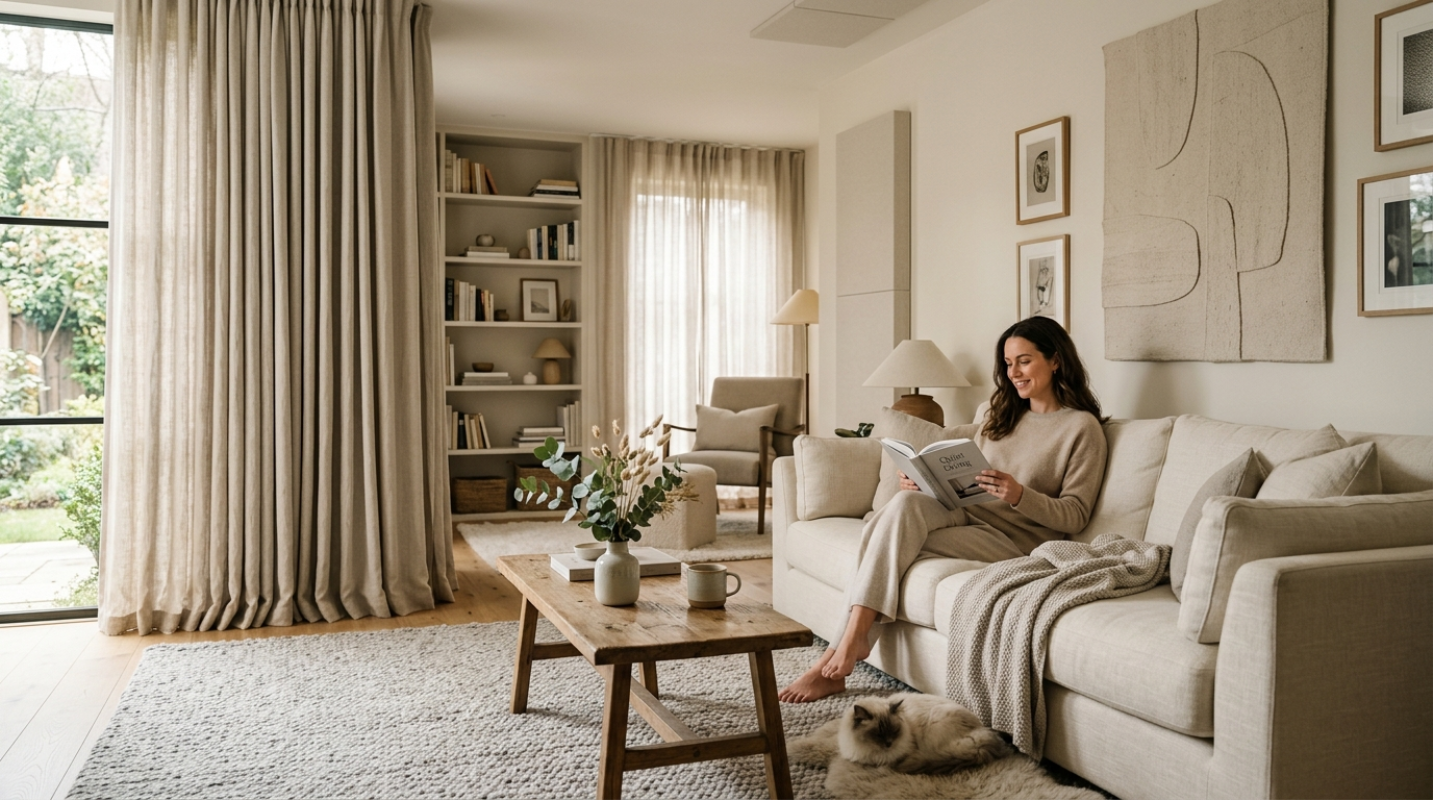
• High-mass natural textiles: Thin synthetic rugs and cheap blinds do nothing for acoustics. Instead, look to heavy, sustainable, natural fibers like wool, hemp, flax, and organic cotton. A thick wool-and-silk rug over a dense felt pad acts as an acoustic blanket for your floors. Swap plastic blinds for floor-to-ceiling velvet or heavy linen drapery to soften both the light and the noise.
• Acoustic furniture: If you have an open-concept layout, sound travels unimpeded. You can break up these sound waves without building walls. Choose high-backed sofas wrapped in textured bouclé, cork-backed wall art, dense bookshelves, and felt-lined room dividers. This creates cozy, quiet zones within a larger space.
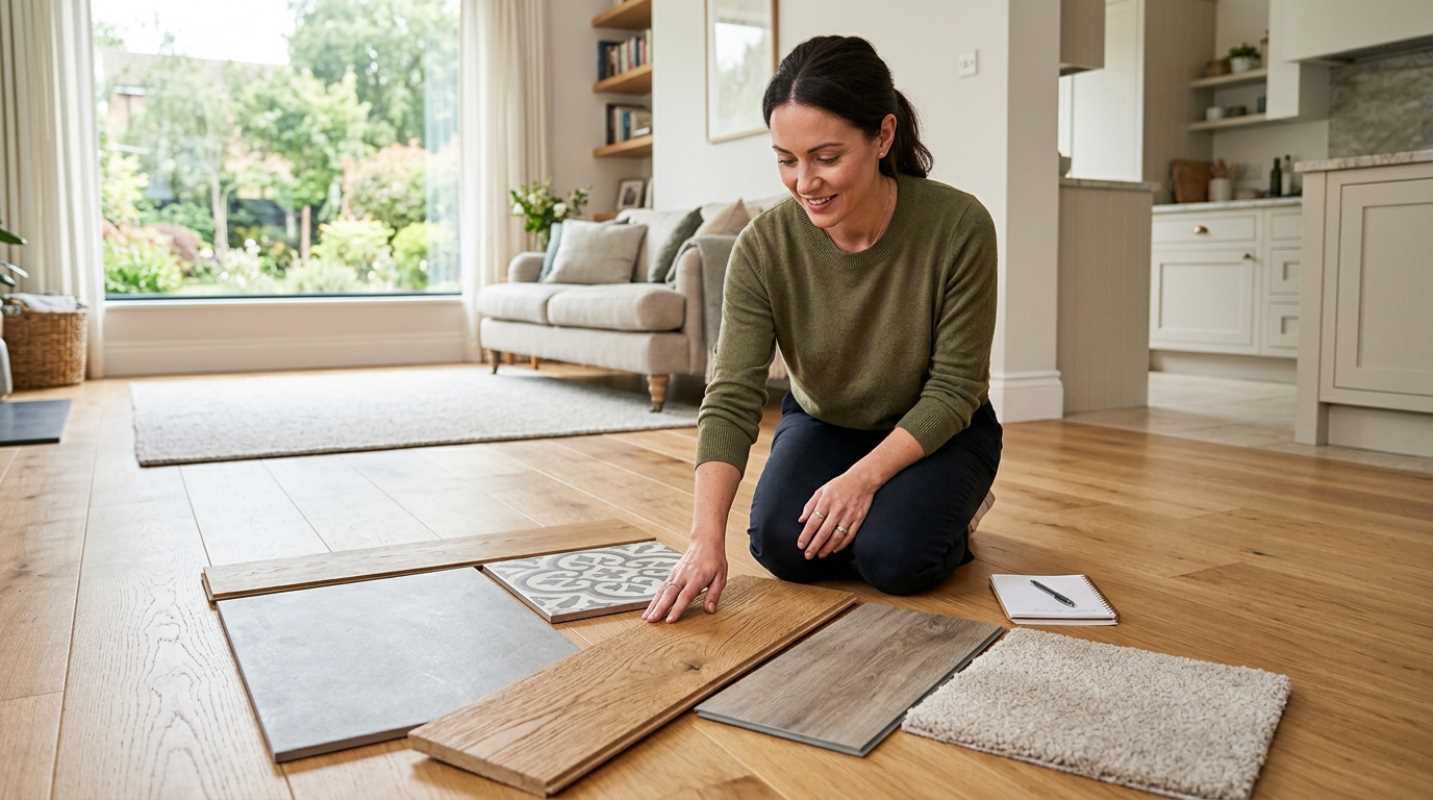
• Acoustic underlayments: Hardwood and luxury vinyl tile look sleek, but they amplify the sound of footsteps, dropped items, and pet claws. If you are replacing any flooring, always install a high-performance cork or recycled rubber underlayment first. This improves the impact insulation class (IIC) rating, turning sharp clicks into soft, distant patters.
Designing for the Senses: Integrating Acoustic Comfort into Your Decor
How do you achieve this quiet atmosphere without making your home look like a commercial recording studio? The key is choosing materials that do double duty.
You do not have to sacrifice your minimalist aesthetic for acoustic performance. In fact, acoustic design works beautifully with modern, clean lines. Look for hidden acoustic features, like acoustic plaster ceilings or wall panels that look like high-end oak slats.¹
Layering textures is your best design tool. Mix a nubby bouclé sofa with smooth wood finishes, heavy linen drapes, and a plush wool rug. This variety of textures naturally diffuses and absorbs sound while creating a rich, sophisticated visual environment.
By choosing natural, sustainable materials, you are also supporting a healthier indoor environment. Biophilic design and acoustic wellness go hand in hand, helping you create a space that feels as good as it looks.
Designing Silence as a Priority
We spend so much time thinking about how our homes look, but we often forget to design for how they feel. Reducing acoustic clutter is one of the most significant upgrades you can make for your daily well-being.
When you minimize the constant, irritating background noise of daily life, you open up space for real focus, deeper sleep, and genuine relaxation. Silence is not just the absence of noise. It is a premium design element that turns a beautiful house into a true sanctuary.
Start with one or two easy fixes, like sealing a drafty door or adding a plush rug. You will notice the difference immediately. Your home will feel calmer, more private, and luxurious.
Sources:
1. JJ Interior Designs - Acoustics in Interior Design
https://jjinteriordesigns.com/acoustics-in-interior-design/
2. Winton Homes - Soundproof Home Design for Luxury Living
https://wintonhomes.com/soundproof-home-design-for-luxury-living-how-quiet-spaces-are-becoming-a-must-have/
3. Acoustical Surfaces - Soundproofing vs. Sound Absorbing
https://acousticalsurfaces.com/blog/soundproofing/soundproofing-vs-sound-absorbing/