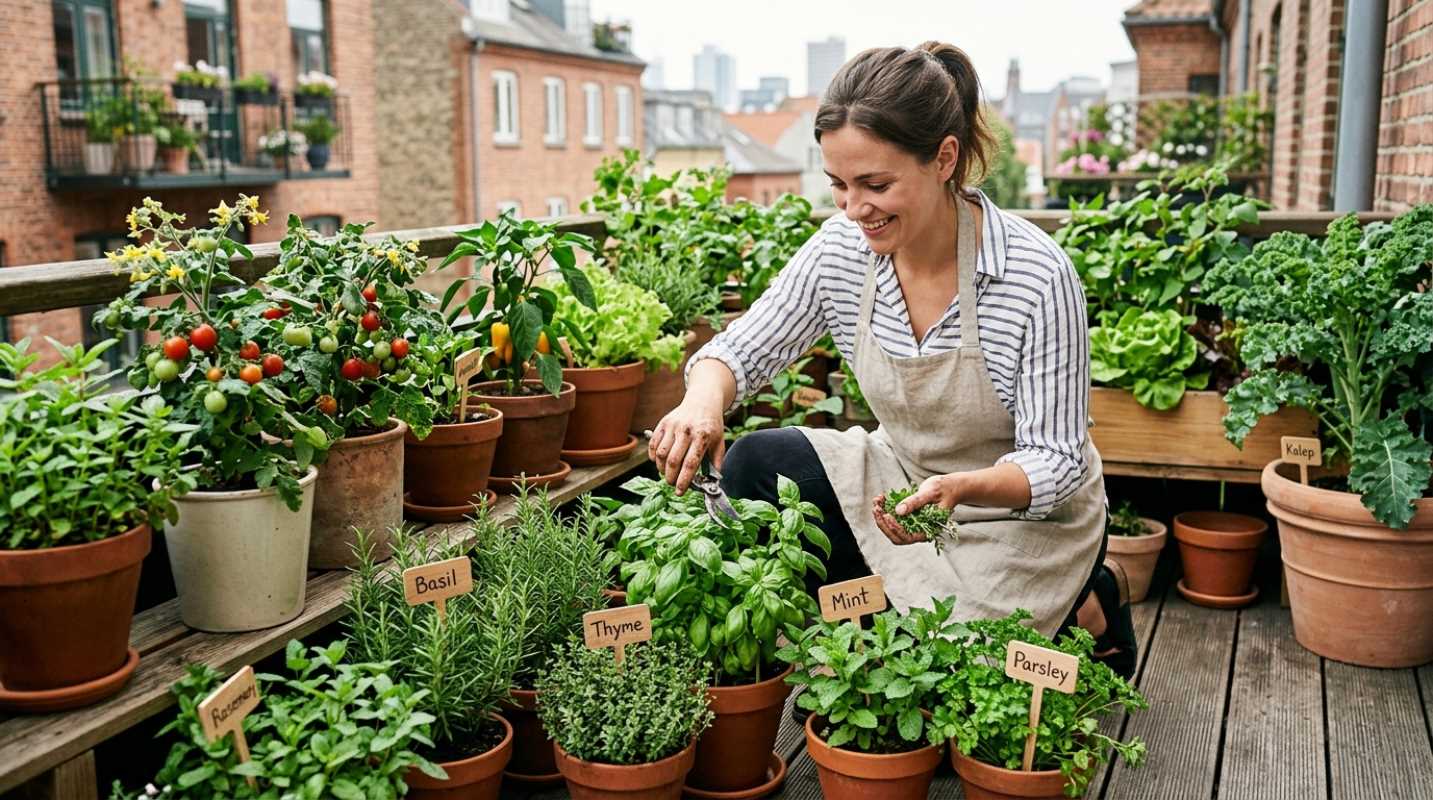
Have you ever looked at a fire escape or a tiny apartment balcony and wished you could grow your own food? You might think you need a massive backyard or a suburban plot to harvest fresh tomatoes and crisp herbs. That's simply a myth. In 2026, the agricultural revolution is happening in plastic pots, fabric grow bags, and window boxes right in the middle of our busiest cities.
The numbers tell a fascinating story. Today, Gen Z and Millennials are leading the charge in home gardening, with over 39% of urban households globally growing food in containers.¹ People are tired of paying sky-high prices for wilted grocery store produce. In fact, more than half of container gardeners say they started growing their own food to lower their grocery bills.¹
But this movement is about more than just saving a few dollars at the checkout counter. It's about connection. There's a distinct psychological boost that comes from watching a tiny seed turn into a salad. Paris Lalicata, the Plant Education Lead at The Sill, points out that consumers are actively shifting away from purely decorative houseplants and choosing plants with purpose.³ We want edible greens, fresh herbs, and fruiting plants that actually do something for us. The global indoor plant market has climbed to over $20 billion, proving that our obsession with bringing nature indoors is here to stay.²
If you're a beginner, container gardening is the most accessible entry point imaginable. You don't have to worry about tilling heavy clay soil, fighting off deer, or managing a massive plot of land. You can start with a single pot of basil on your kitchen windowsill and expand from there. It's low-risk, high-reward, and incredibly satisfying.
Choosing the Right Containers and Soil for Success
Before you buy seeds, you need to think about where those plants are going to live. The absolute golden rule of container gardening is drainage. If your container doesn't have holes at the bottom, your plants will die. It's that simple. Without drainage, water pools at the bottom, suffocating the roots and causing root rot.
What kind of pot should you choose? You have three main options, and each has its own personality.
• Plastic pots, These are lightweight, affordable, and excellent at retaining moisture. They're perfect if you tend to forget to water your plants.
• Terracotta pots, These clay pots are beautiful and breathable, but they pull moisture out of the soil. You'll need to water plants in terracotta more frequently.
• Fabric grow bags, These are a favorite among modern gardeners. They allow air to reach the roots, which prevents the roots from circling and choking themselves.
How big should your pots be? Although space is tight, you want to give your plants as much room as possible. Most vegetables need a pot that is at least 14 inches in diameter. If you're growing larger plants like tomatoes or cucumbers, aim for 10 to 15 gallon containers.
Once you have your pot, skip the backyard dirt. Straight garden soil is too heavy, packs down like concrete in a pot, and starves roots of oxygen. Instead, buy a high-quality, loose potting mix. If you want to make your own premium blend, mix one part potting soil, one part organic matter (like compost or peat moss), and one part perlite for aeration.
Top Picks for Small Space Vegetables and Herbs
You don't have to settle for tiny yields just because you're growing in a pot. Plant breeders have spent years developing dwarf and patio varieties that produce massive harvests on compact frames. Let's look at some of the best varieties available in 2026, including some outstanding All-America Selections winners.
Compact Vegetables for Pots
• BadaBing! F1 Tomato, This cherry tomato plant stays under 40 inches tall but produces sweet, meaty fruit all season long.
• Tiny Tim Tomato, A classic micro-dwarf heirloom that grows only 12 to 15 inches tall, making it perfect for a window box.
• Pick-N-Pop Yellow F1 Pepper, A sweet mini pepper plant that produces up to 100 bright yellow peppers on a single compact bush.
• Rubybor F1 Kale, A gorgeous purple kale that is both beautiful and delicious, tolerating heat exceptionally well.
• Konstance F1 Kohlrabi, This hybrid produces sweet, crunchy bulbs in less than 50 days.
• Patio Snacker Cucumber, A short vining variety that only needs a small trellis to yield full-sized cucumbers.
• Butter Lamp F1 Squash, A mini butternut squash bred specifically to grow on manageable, space-saving vines.
Growing Herbs Indoors
If you want fresh flavors all year, an indoor herb garden is your best bet. Basil 'Treviso' is a fantastic choice for indoor pots because it is highly branched, slow to flower, and resists common mildews.
To make the most of your space, try companion planting. You can plant basil at the base of your tomato plants. The basil enjoys the shade provided by the tomato leaves, and you save precious pot space.
Mastering the Fundamentals Light, Water, and Nutrients
Now that you have your pots, soil, and plants, how do you keep them alive? It comes down to three basic needs: light, water, and food.
Most fruiting vegetables need 6 to 8 hours of direct sunlight daily. If your balcony only gets morning sun, you might need to chase the light. Putting heavy pots on wheeled plant caddies makes this incredibly easy. You can roll your plants into the sun in the morning and push them out of the way when needed.
Watering container plants is different from watering a backyard garden. Pots dry out much faster, especially on hot or windy days. How do you know when to water? Skip the high-tech gadgets and use the finger test. Push your index finger an inch into the soil. If it feels dry, it's time to water. If it's still damp, walk away. For a hands-off approach, self-watering container systems are highly recommended because they use a reservoir at the base to wick moisture up to the roots as needed.
Finally, you must feed your plants. Every time you water a container, some of the soil's nutrients wash out of the bottom. Because of this, container plants need regular fertilization. Apply a high-quality, water-soluble organic fertilizer every 1 to 2 weeks during the active growing season to keep your plants productive.
If you're growing herbs indoors, light is your biggest challenge. Herbs need at least 6 hours of direct light. A southern-facing window is ideal, but you should rotate your pots 180 degrees every few days so they don't grow lopsided. In the winter, use LED grow lights placed 6 to 12 inches above your herbs for 14 to 16 hours a day to keep them growing.
Keeping Your Container Garden Growing Through the Seasons
Growing in a small space comes with its own set of challenges, but they are easy to manage once you know what to look for.
Balconies and high-rise patios can experience extreme conditions. High winds can dry out foliage and knock over top-heavy plants, while concrete patios can turn into ovens during heatwaves. If a heatwave hits, use your wheeled caddies to roll your plants into the shade, or drape a light cloth over them to prevent sunburn.
Pests can still find your plants, even on a high floor. Indoors, overwatered soil is a magnet for annoying fungus gnats. You can easily control them by letting the top inch of soil dry out completely between waterings and putting a thin layer of sand on top of the soil.
When harvesting your herbs, always snip from the top down, just above a leaf node. Never take more than a third of the plant at once. This encourages the herb to branch out and become bushy instead of tall and spindly.
As the seasons change, you can transition your garden. Bring hardy herbs indoors before the first frost, or wrap larger pots in burlap to protect the roots from freezing. With a little planning, your small-space garden can keep you in fresh produce all year long.
Sources:
1. Container Gardening Statistics
https://pitsinpieces.com/container-gardening-statistics/
2. Houseplant Statistics
https://terrariumtribe.com/houseplant-statistics/
3. The Sill Plant Trend Report
https://www.thesill.com/blogs/ask-the-sill/the-sill-2025-plant-trend-report-2026-predictions